
HERBICIDE TREATMENTS
Supports wetting, spreading, retention and more uniform spray distribution.

Supporting spray performance across the rapeseed production cycle
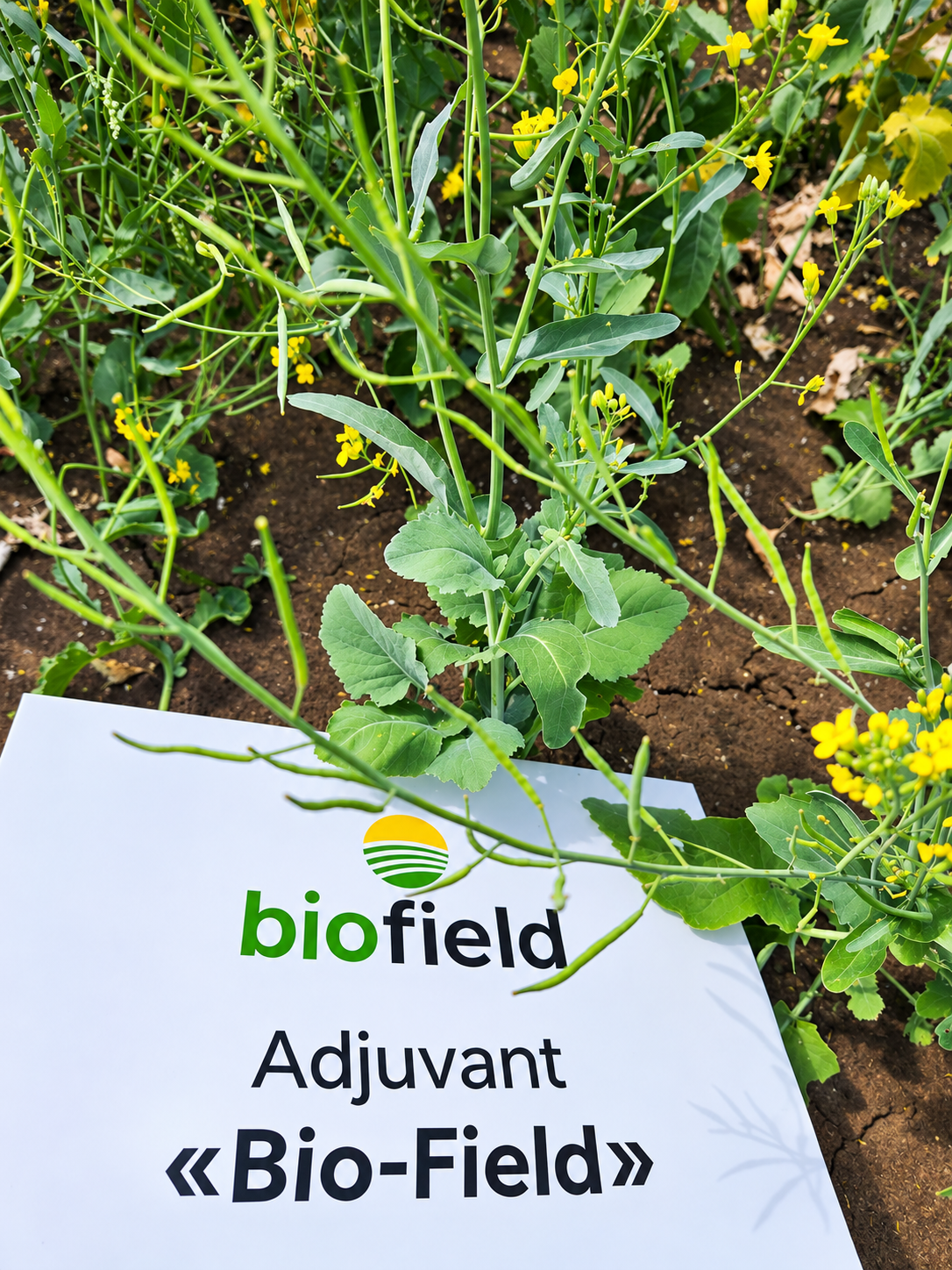
Bio-Field is a tank-mix adjuvant designed to support wetting, spreading, retention, penetration and application consistency across multiple foliar treatments in rapeseed.
It can be integrated into herbicide, fungicide, insecticide, foliar nutrition, biological and pre-harvest desiccation programs.
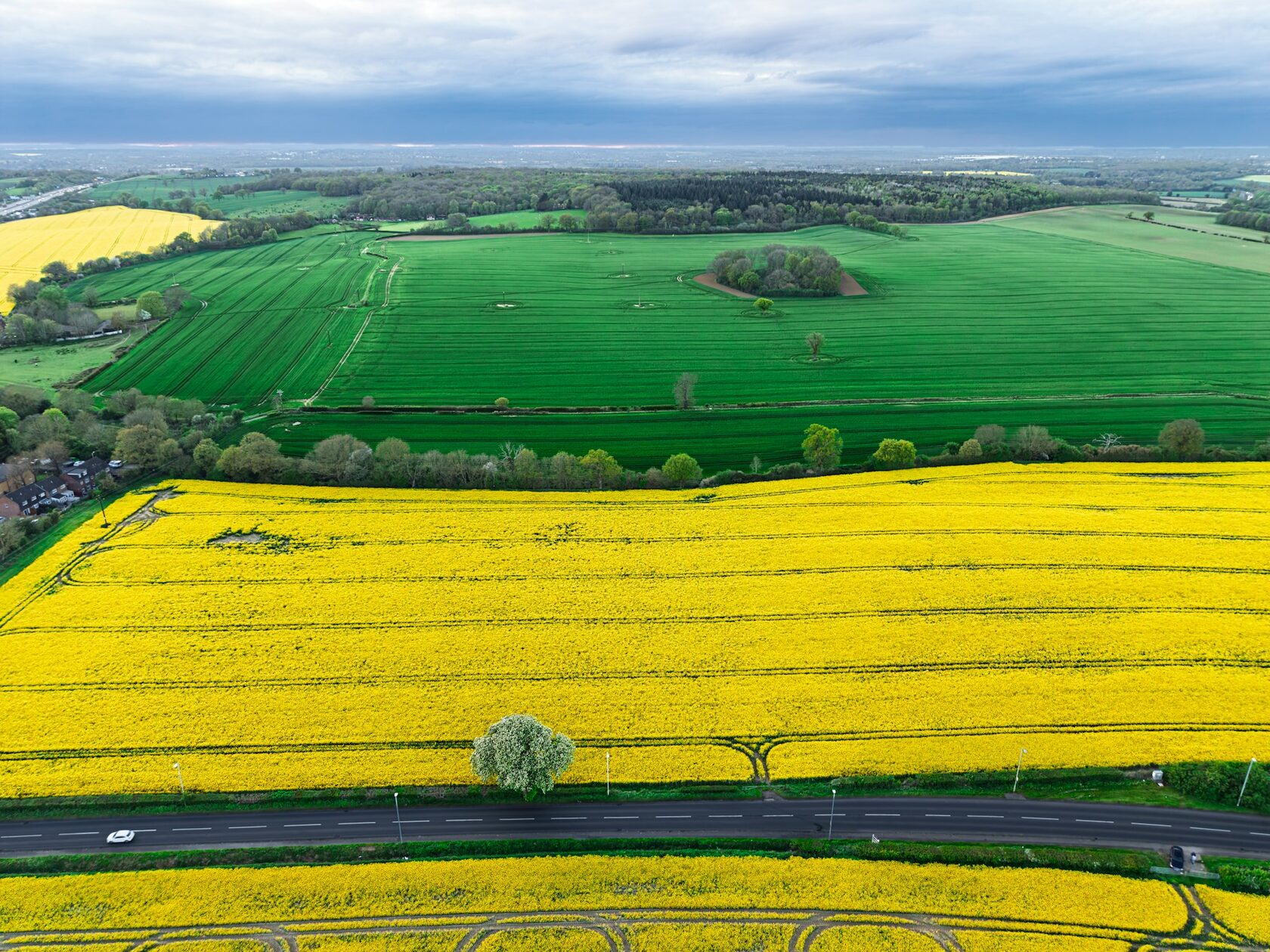 Rapeseed field application
One adjuvant supporting multiple foliar applications throughout the season.
Supports wetting, spreading, retention and more uniform spray distribution.

Supports coverage and treatment consistency across leaves, stems and developing crop structures.

Supports better deposition, retention and contact of the insecticide treatment.
Supports more uniform application and uptake of foliar-applied products.

Supports more uniform spray coverage and consistent crop drying.
Bio-Field can be integrated into multiple foliar applications. This page highlights two real commercial field cases: insecticide treatment and pre-harvest desiccation.
Supports more uniform distribution of spray droplets.
Supports adhesion and retention of the insecticide.
Helps improve distribution through the canopy.
Supports availability of active ingredients.
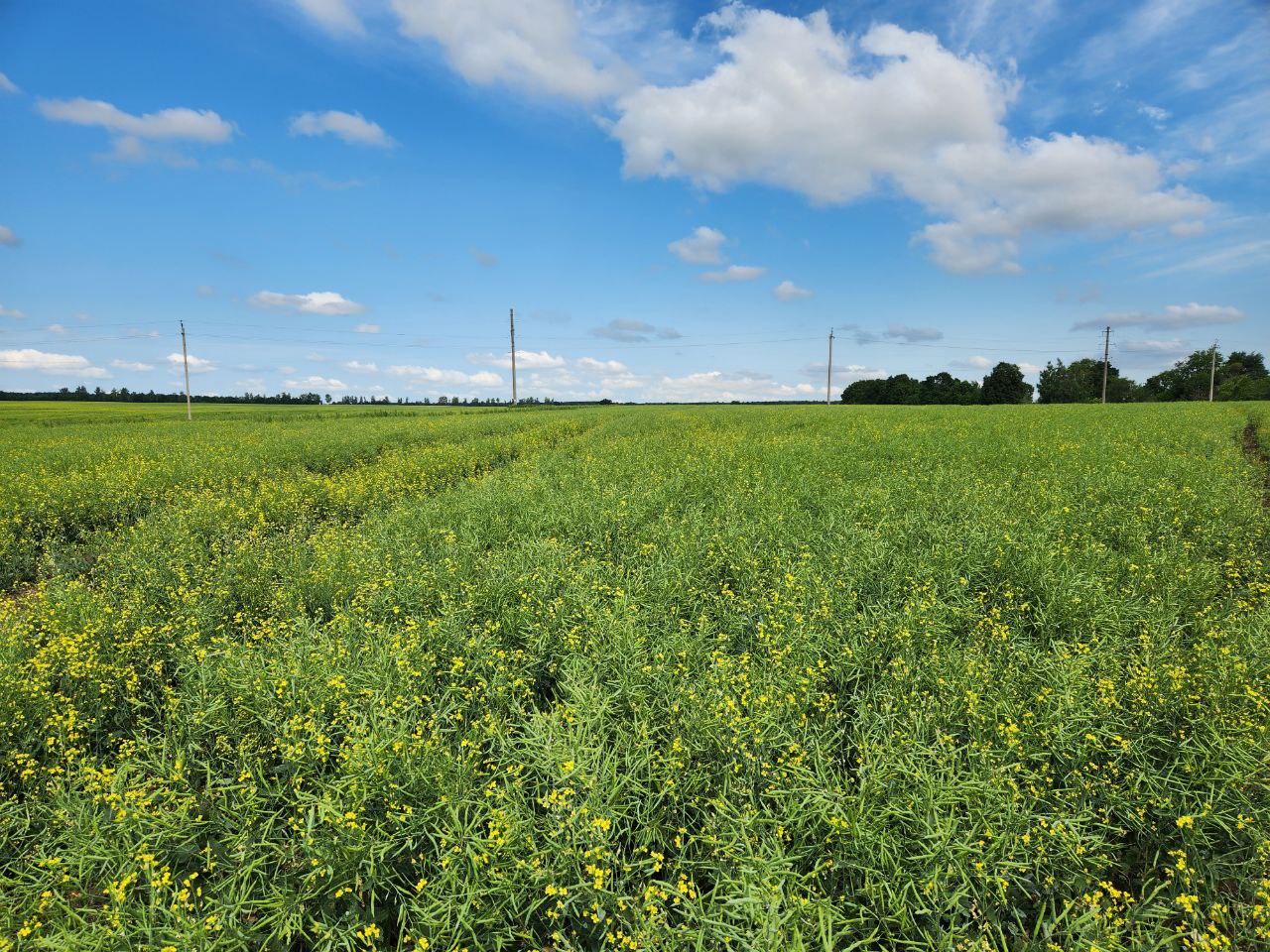
Insecticide without Bio-Field
Field with Bio-FIeld trials
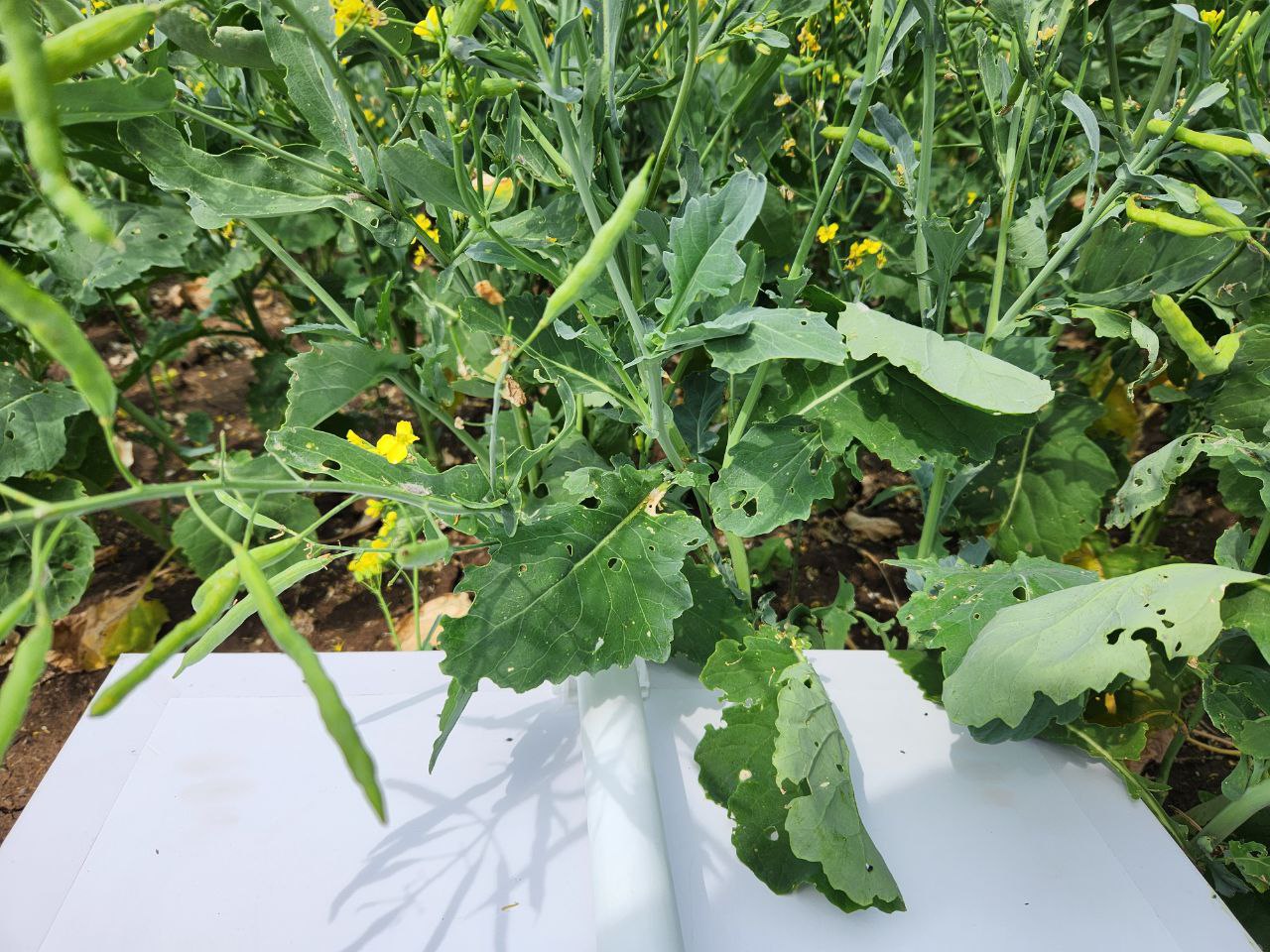
Insecticide without Bio-Field
Insecticide with Bio-Field
Rapeseed is a challenging crop for foliar insecticide applications.
Its dense canopy, waxy plant surfaces and large number of leaves, stems, flowers and developing pods make uniform spray coverage difficult. Part of the insecticide solution may remain in the upper canopy or fail to achieve sufficient contact with the target surface.

Bio-Field modifies the physical behaviour of the spray solution, helping droplets spread more uniformly and remain on waxy plant surfaces.
This supports more consistent deposition of the insecticide across leaves, stems and developing pods and improves coverage through the complex rapeseed canopy.
The insect cuticle is a complex protective barrier containing chitin, proteins and lipids.
Bio-Field contains a polysaccharide-based functional matrix that can support deposition, adhesion and prolonged contact of the spray solution with treated surfaces.
This increases the opportunity for the insecticide to remain in contact with the pest surface and penetrate the protective cuticular barrier.
This mechanism can be particularly relevant for contact-active insecticides, where effective deposition and contact are important to treatment performance.
The active ingredients provide complementary insecticidal activity, while Bio-Field supports the quality of the spray application through improved wetting, coverage, retention and contact.

Visible feeding damage and loss of leaf area under insect pressure.
Visibly lower feeding damage and better preservation of the crop canopy observed in the Bio-Field treatment area.
Commercial field observation. No numerical efficacy or yield results are implied.
Better Wetting
+ Better Coverage
+ Better Retention
Better Deposition
+ Stronger Adhesion
+ Longer Contact
MORE CONSISTENT INSECTICIDE PERFORMANCE
Better preservation of the crop canopy under insect pressure.
Better preservation of intact leaf area.
Protection of reproductive plant structures.
More consistent protection across the field.
Lower risk of yield loss under insect pressure.
Bio-Field does not replace the insecticide.
It helps the insecticide treatment reach, cover and remain on the target more effectively.
Commercial field observation
Pre-harvest desiccation in rapeseed requires uniform spray coverage across a complex crop structure.
At the end of the season, stems, pods and remaining green plant material can dry at different rates. Uneven treatment may result in parts of the field becoming harvest-ready earlier while other areas remain green.
Bio-Field was added to the desiccation spray program to support more uniform application and crop response.
Rapeseed presents a large and complex spray target with stems, branches and pods located at different heights and angles. Uneven deposition of the desiccation treatment may lead to inconsistent drying across the crop and make harvest timing more difficult.
Supports more uniform distribution of the spray solution across stems, pods and remaining green plant material.
Helps the working solution remain on treated plant surfaces.
Supports more consistent deposition of the desiccation treatment across the crop.
Helps reduce variability in spray performance across the field.
Side-by-side commercial field observation. Add the original, verified field photographs to each frame.
Visible remaining green plant material and less uniform crop drying.
More advanced and visually more uniform drying observed in the Bio-Field treatment area.
By improving the quality and uniformity of spray deposition, Bio-Field can support a more consistent response to the desiccation treatment across the crop.
Compared with the control area, the Bio-Field treatment showed visibly more uniform crop drying and less remaining green plant material at the time of field observation.
More uniform crop readiness can make the optimal harvest window easier to determine.
More predictable field readiness can simplify harvesting equipment scheduling.
Reduces the difference between fully dried and still-green areas of the crop.
More consistent harvest preparation can reduce uncertainty when weather and harvesting conditions are changing.
Better application quality can help make crop preparation for harvest more consistent and predictable.
Field observations shown in this section reflect a specific commercial field application. Performance may vary depending on crop maturity, treatment program, application timing, spray volume, weather conditions and local agronomic conditions.
Discuss your program and evaluate the adjuvant under your local conditions.
Contact Bio-FieldField observations reflect specific commercial applications. Performance may vary.